
UAE Advance Pricing Agreement (APA) Explained: Corporate Tax Certainty Under FTA Framework
Learn what an Advance Pricing Agreement (APA) is under UAE Corporate Tax, who should apply, key benefits, eligibility, and how the FTA APA framework provides transfer pricing certainty for businesses in the UAE.


UAE Advance Pricing Agreement (APA): A Strategic Tool for Corporate Tax Certainty
With the introduction of UAE Corporate Tax, transfer pricing compliance has become a critical focus area for businesses operating in the United Arab Emirates. One of the most significant developments in this area is the introduction of the Advance Pricing Agreement (APA) programme by the Federal Tax Authority (FTA).
The APA framework allows businesses to obtain advance certainty on how related-party transactions will be priced and taxed under the UAE Corporate Tax Law.
What is an Advance Pricing Agreement (APA)?
An Advance Pricing Agreement (APA) is a formal agreement between a taxpayer and the FTA that determines, in advance, the method for calculating the arm’s length price of controlled transactions with related parties.
Once an APA is concluded, the FTA will not challenge the agreed transfer pricing methodology, provided the taxpayer complies with the agreed terms and critical assumptions.
Legal Basis of APA in the UAE
The APA programme is introduced under Federal Decree-Law No. 47 of 2022 on the Taxation of Corporations and Businesses, specifically:
- Article 34 – Arm’s Length Principle
- Article 59 – Advance Pricing Agreements
The programme aligns the UAE with OECD Transfer Pricing Guidelines and international best practices.
Who Should Consider an APA in the UAE?
An APA is particularly relevant for businesses that have:
- High-value related-party transactions
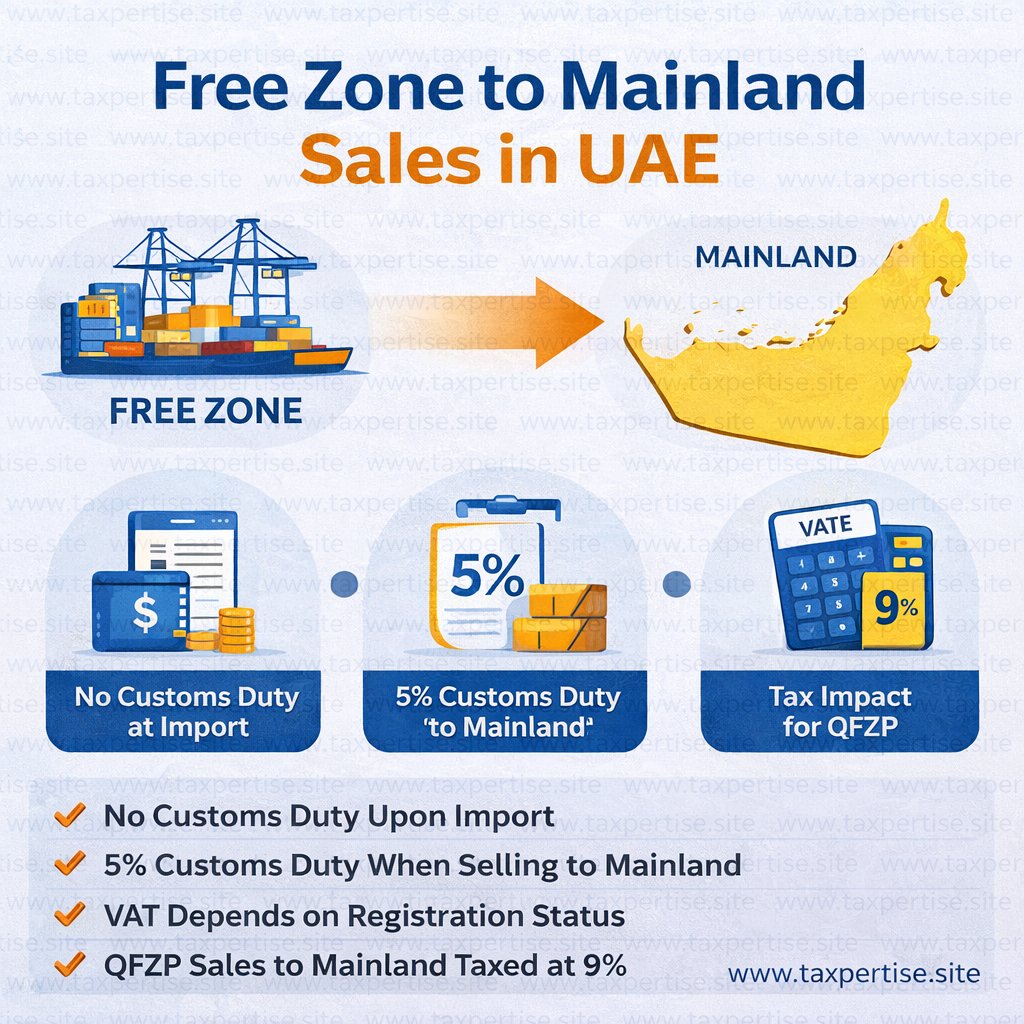
- Free Zone to Mainland transactions with different tax rates
- Cross-border group transactions
- Complex pricing models such as management fees, royalties, services, or intercompany financing
As a general benchmark, APAs are most suitable where the total value of controlled transactions is AED 100 million or more per tax period.
Types of Advance Pricing Agreements in the UAE
Unilateral Advance Pricing Agreement (UAPA)
A Unilateral APA is an agreement between the taxpayer and the FTA only. It provides certainty from a UAE Corporate Tax perspective.
- Domestic UAPAs are accepted from December 2025
- Cross-border UAPAs are expected to be introduced in 2026
Bilateral and multilateral APAs will be introduced in later phases as the framework matures.
Key Benefits of an APA
- Certainty on transfer pricing outcomes for 3 to 5 tax years
- Reduced risk of transfer pricing audits and disputes
- Lower exposure to penalties and tax adjustments
- Clear compliance and documentation expectations
- Improved relationship with the tax authority
APA vs Regular Transfer Pricing Documentation
Regular transfer pricing documentation is reviewed after filing, whereas an APA is agreed in advance. This makes an APA a proactive compliance and risk management tool rather than a defensive one.
Official FTA Reference
The APA framework is explained in detail in the official FTA guide:
Federal Tax Authority – Corporate Tax Guide on Advance Pricing Agreements
Final Thoughts
The UAE Advance Pricing Agreement programme represents a major shift toward predictable, transparent, and cooperative tax administration. While APAs may not be required for every business, they are a powerful strategic option for groups with material or complex related-party transactions.
Early assessment and preparation are essential, as APA applications require robust technical analysis, strong documentation, and clear commercial justification.
What's Your Reaction?
 Like
0
 Dislike
0
 Love
0
 Funny
0
 Wow
0
 Sad
0
 Angry
0












Comments (0)